
Évora
Discover everything you can see in Évora, the capital of Alentejo
What to See in Évora
Évora is the capital of Alentejo and one of the most historically rich cities in Portugal. It is no coincidence that it is known as the Museum City, and its historic center was declared a UNESCO World Heritage Site in 1986. It is one of the day trips from Lisbon that will leave you wanting more.
We tell you what to do in Évora, share the history of the places we recommend visiting, and explain how to get there from Lisbon so you can plan your trip ahead of time.
What to See in Évora
Discover the best of the city on a free tour so you don't miss a thing. But if you're exploring on your own, here are some of the top sights in Évora you won't want to skip. Take note!
Diana Temple
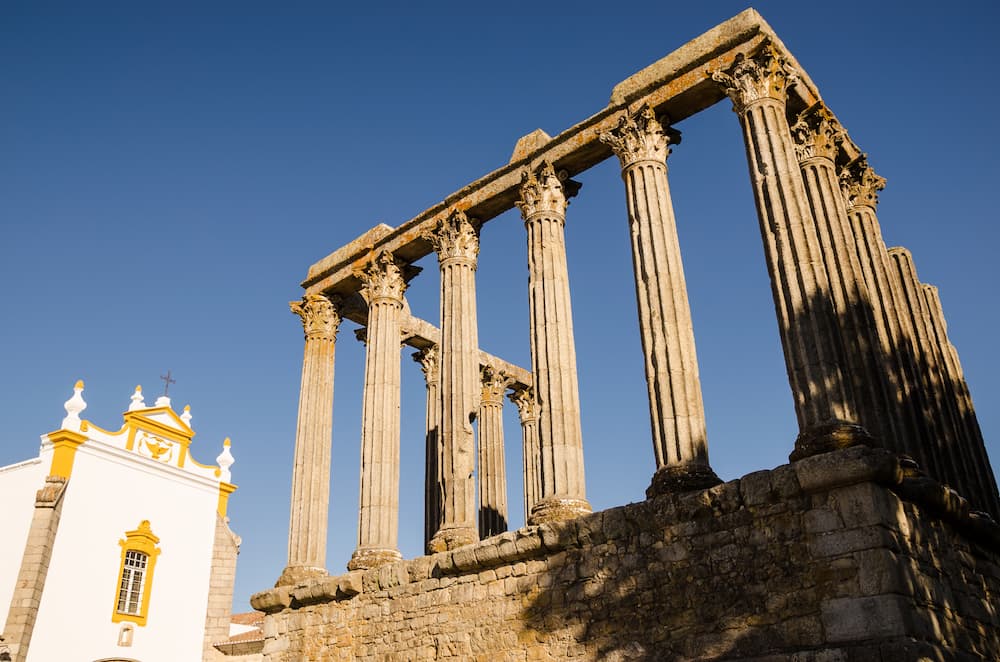
Did you know that Évora was a municipality in the Roman province of Lusitania? That's why there's a Roman temple dating from the 1st century BC, featuring 14 marble columns — and it's one of the most important sights in the city, as it is the best-preserved Roman building in all of Portugal.
It is also known as the Temple of Diana because it was once believed to be dedicated to the goddess, though it may also have been built in honor of Emperor Caesar Augustus.
Church of St. Francis and Chapel of Bones in Évora
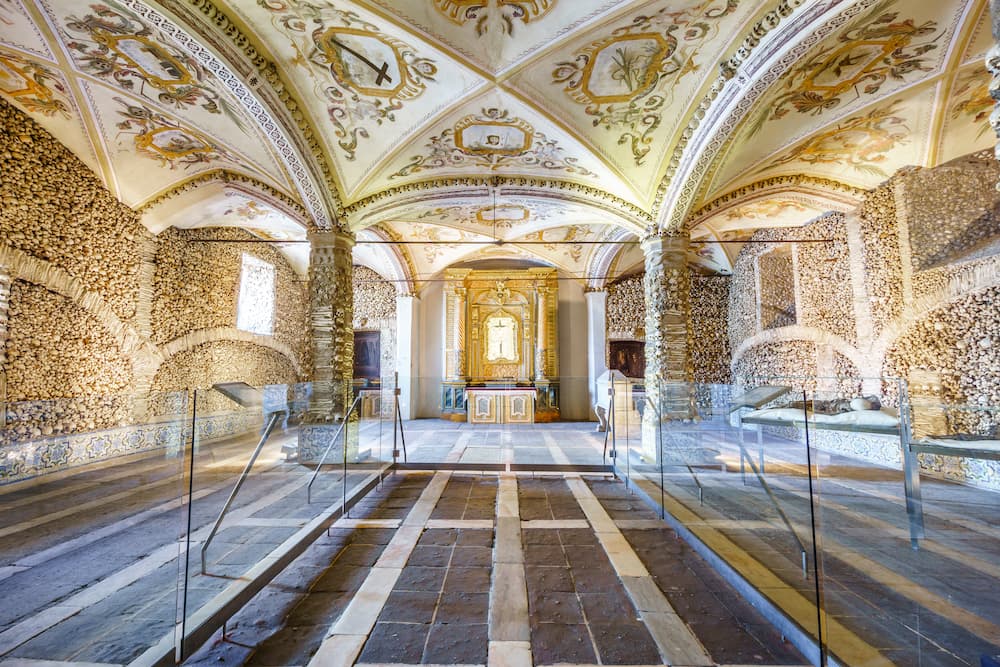
South of Praça do Giraldo you'll find the Church of St. Francis, a Gothic temple built between the 16th and 17th centuries that is free to enter and well worth a visit.
But the real showstopper is undoubtedly the Chapel of Bones inside (which requires a paid admission ticket). This space was built on the orders of Franciscan friars and is entirely lined with skulls and bones taken from several cemeteries. It is estimated that just over 5,000 skeletons may be housed there.
We won't deny it — it's a little unsettling to read the inscription at the entrance that says: "We bones that are here, await yours."
Aqueduct of Silver Water (Acueducto da Agua Da Prata)
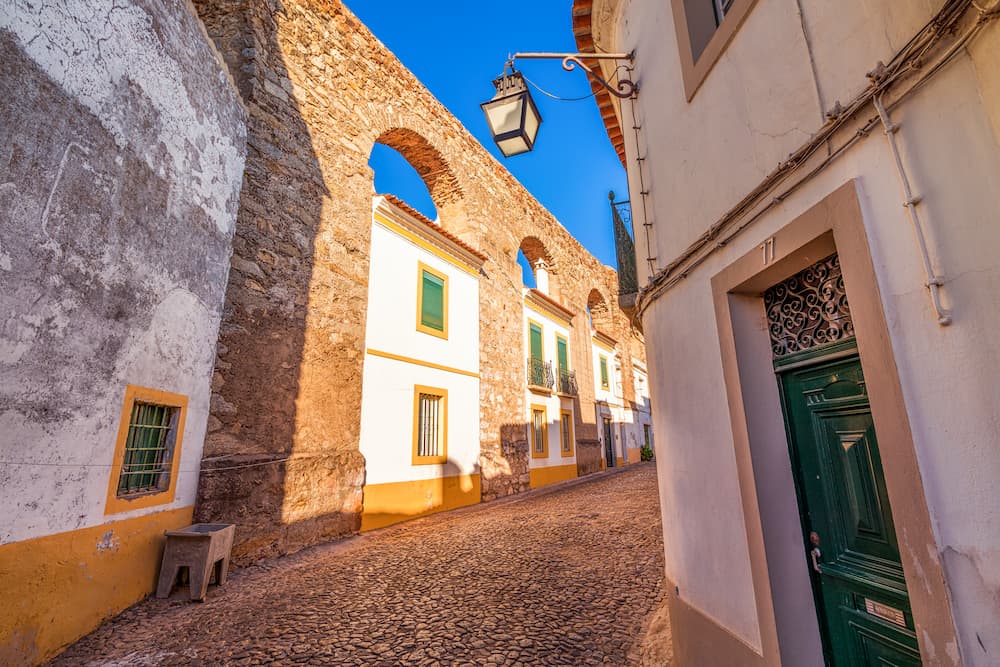
Évora's aqueduct is impressive at nearly 9 kilometers long, and you can see it to the northwest of the city. It was designed by Francisco de Arruda in the 16th century — the same architect responsible for Belém Tower in Lisbon — and supplied the city with drinking water. A true feat of engineering!
As you make your way into the city, you'll notice how buildings, shops, and even cafés have been built beneath its arches, along cobblestone streets that add an incredible charm to a stroll through Évora.
Praça do Giraldo
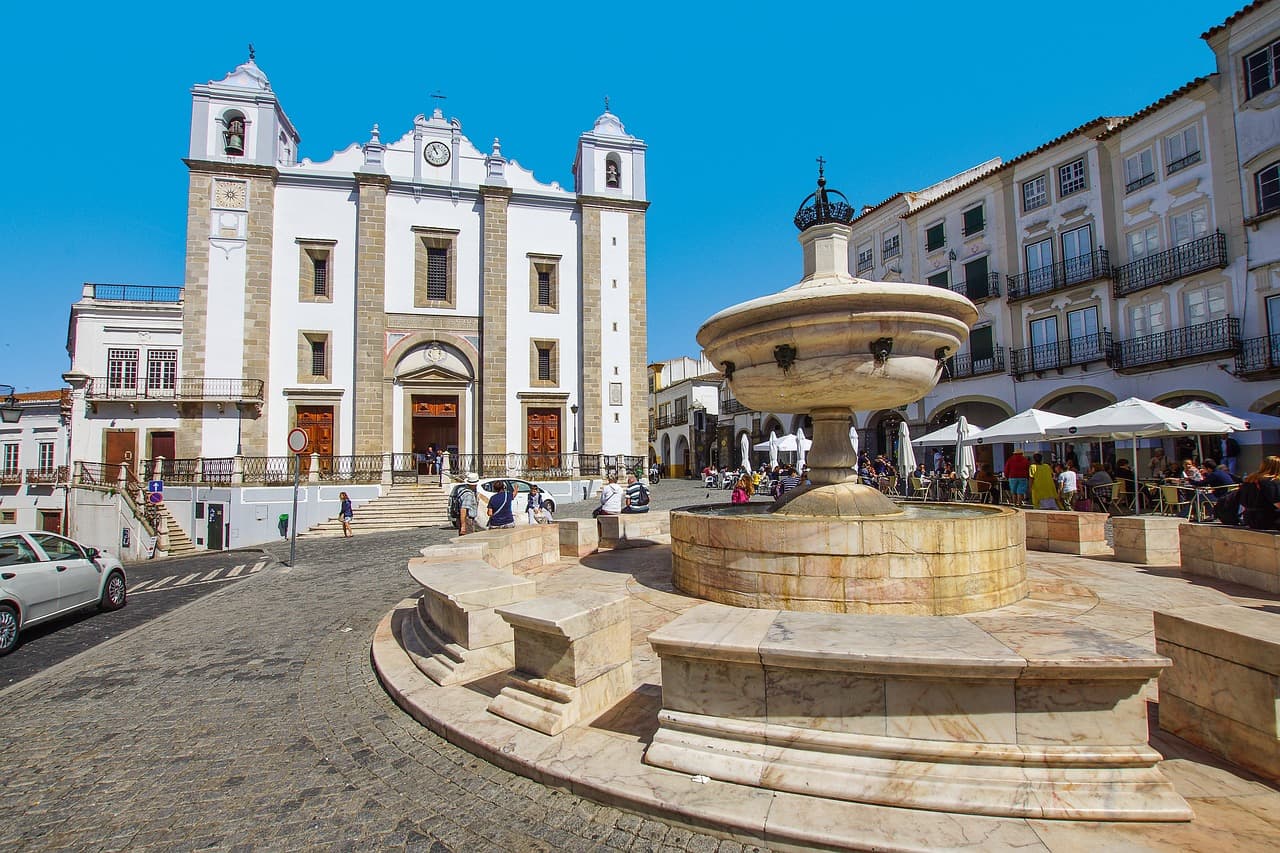
Évora has 8 main streets, and they all converge at Praça do Giraldo — the city's lively central hub, surrounded by restaurants, terraces, cafés, shops, and typical Alentejo buildings.
It takes its name from Geraldo Geraldes, who conquered Évora in 1167. You'll know you've arrived by the atmosphere alone, but also by the marble fountain in front of the Church of St. Anthony — one of the most photographed spots in the city.
The Sé de Évora
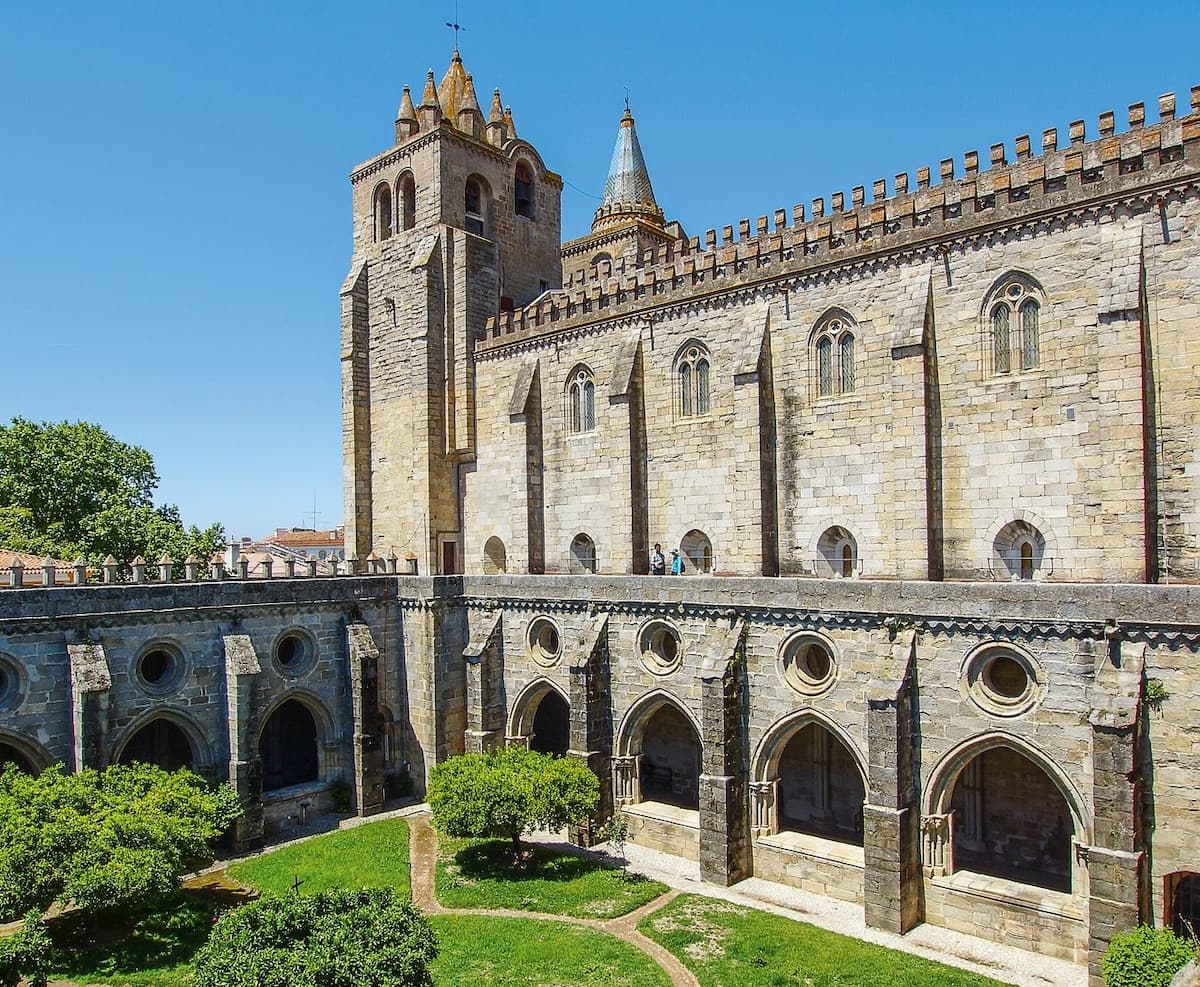
Évora Cathedral — known locally as the Sé — is the tallest building in the city and looks more like a fortress than a cathedral. It rises imposingly above the city's red rooftops, drawing everyone's eye.
Construction began in 1186 and was completed in 1204, though it has undergone several renovations over the centuries. You can enter the cathedral, but there is an admission fee (€4.50) to see the cloister, the Cathedral Museum, and to climb one of its towers for a breathtaking panoramic view of Évora — the best vantage point in the city.
Évora Museum
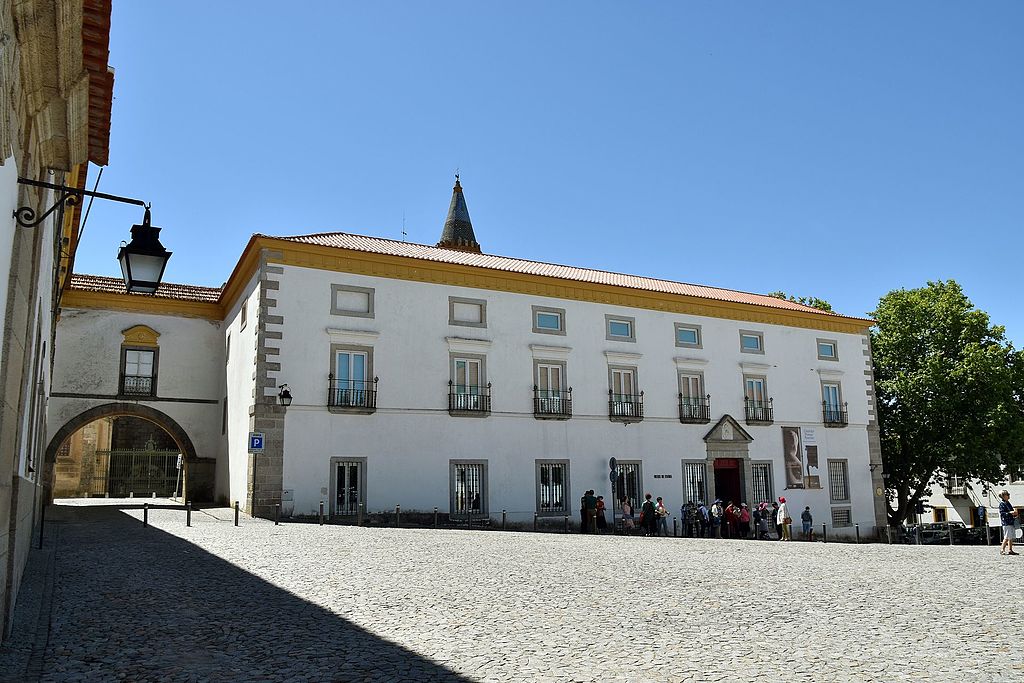
Adjoining the Sé is the Évora Museum, housed in the former 16th-century Episcopal Palace. It holds a collection of at least 20,000 pieces spanning Islamic, Roman, and medieval archaeology, as well as paintings, sculptures, crafts, and furniture.
The most outstanding work is the Polyptych of the Sé de Évora, a 15th-century altarpiece that once stood on the cathedral's high altar.
The City Walls
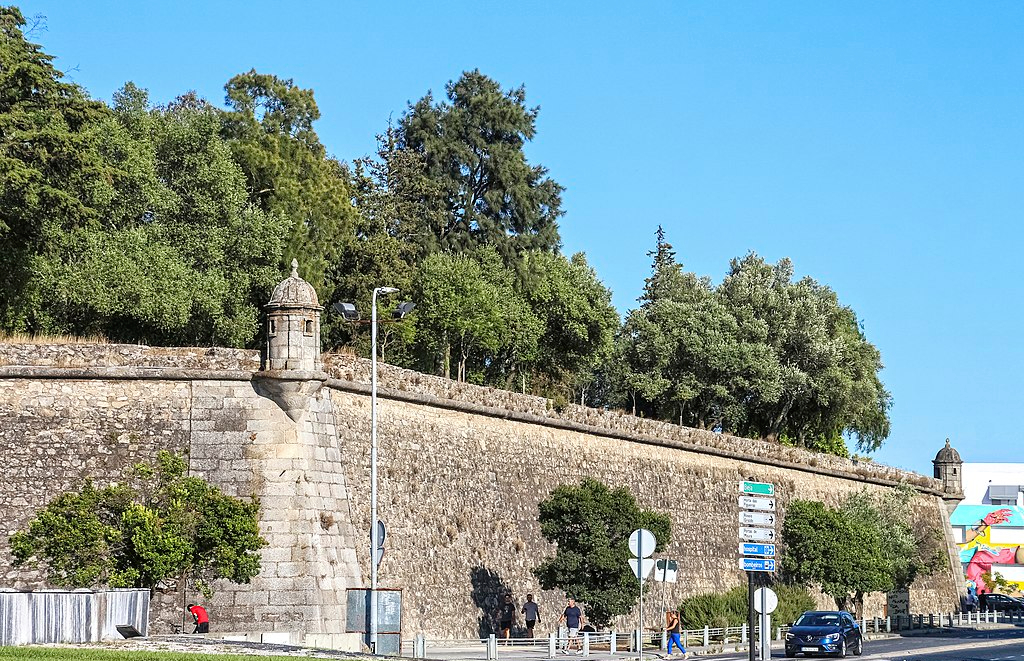
Évora was once surrounded by 2 walls dating from different eras. The first — Cerca-Velha — dates from the 3rd century and is of Roman origin. It stretched 2 kilometers and you can still see some remnants of it near the cathedral.
The other wall — Cerca-Nova — was built between the 16th and 17th centuries and encircled the historic center. The best-preserved sections are between the Gate of Avis and the University. From there, you'll also have the finest views of the aqueduct.
How to Get to Évora from Lisbon
Évora is 130 kilometers from Lisbon — about 1 hour 30 minutes by car. If you choose to drive, keep in mind that there are several toll payments along the route.
A comfortable way to reach Évora is by taking a day trip from Lisbon where you can take in everything on a full 10-hour visit, with a Spanish-speaking guide and nothing to worry about.
You can also get to Évora from Lisbon by train from Sete Rios station, located on the blue line of the Lisbon Metro. The journey takes 90 minutes and a ticket costs approximately €13. Alternatively, you can travel by bus from the same station, with prices varying depending on the departure time you choose.
More Nearby Day Trips from Lisbon
Don't miss these fascinating places to visit near Lisbon
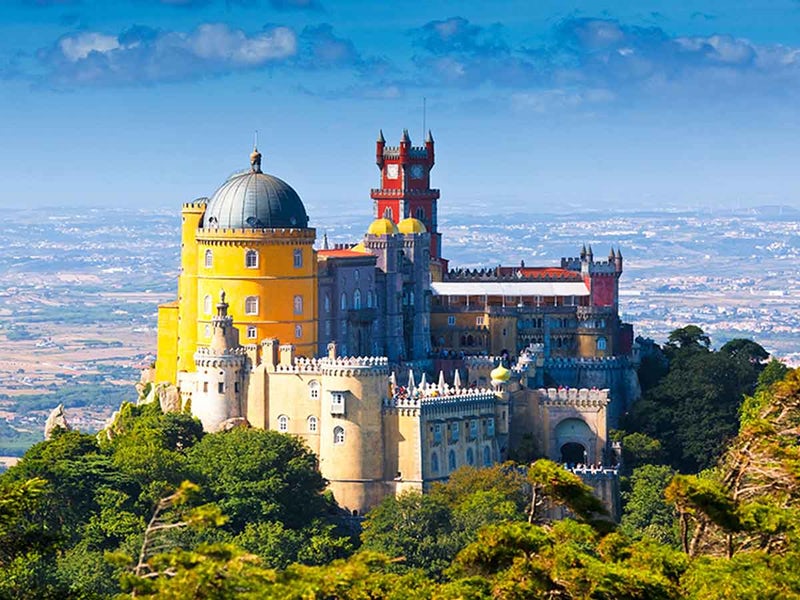
Sintra
This charming village of palaces and forests is one of the most important destinations around Lisbon. In the photo you can see the famous Palácio da Pena, an absolute must-see. Beyond the beautiful village itself, you'll also want to explore the Quinta da Regaleira and the Moorish Castle.
Fátima
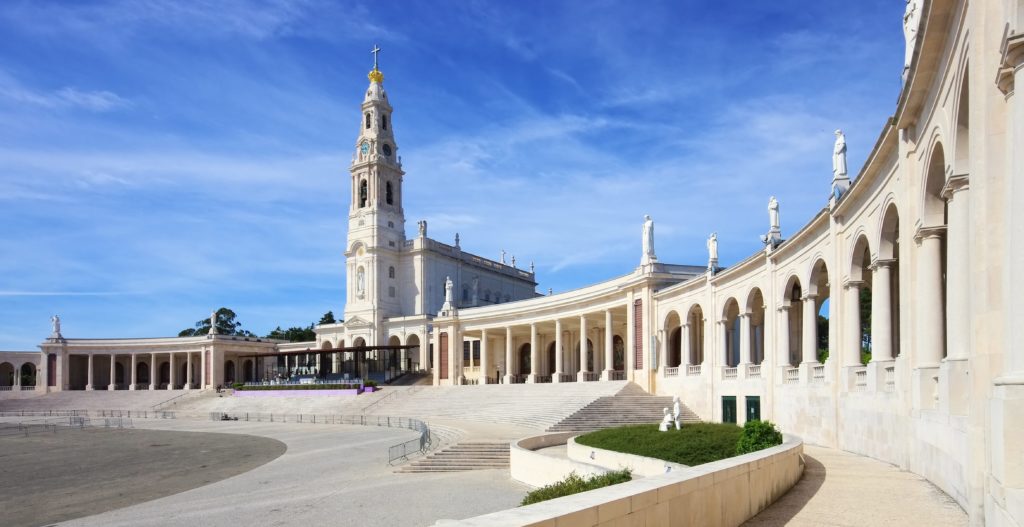
The most popular pilgrimage site in Portugal and one of the most visited by religious tourists. Discover in our guide how to get to Fátima, what to see, and what to expect from the famous religious Sanctuary.
