
What to Eat in Lisbon
Tips so you don't miss Lisbon's local specialties
What to Eat in Lisbon
There's a whole gastronomic world to discover in Lisbon. If you're like most Guiajando readers, you'll probably agree that there's no better way to get to know a country than through its food.
With this short guide, we want to help you have a better culinary experience in Lisbon.

Breakfast
Start your gastronomic journey in Lisbon with a good Portuguese breakfast: order the Breakfast (pequeno almoço) with a Galão (pronounced "galaum"), a 50/50 coffee with milk (more on how to order coffee in Lisbon) and a Bolinho, a pastry item.
One of the most famous "bolinhos" is the pastel de nata, and the king of pastéis de nata is the Pastel de Belém. If you are in the Belém area, a popular Lisbon neighborhood, you have to stop by this place and try them fresh out of the oven — the bakery is right next to the Jerónimos Monastery.
The Portuguese typically have for breakfast a Torrada (toast with butter) or a Croissant in the French style or a Brioche, which is usually filled with ham and cheese or chocolate. If you order a Sandes it is a rustic filled bread roll, like a sandwich but simpler. It can contain ham, cheese, or both.
Afternoon Snack
During the afternoon, it is customary to have the famous "lanche". A sweet or savory snack enjoyed while waiting for dinnertime. It is quite similar to breakfast, though a few fried items are added, such as salt cod pastries, meat croquettes, or shrimp croquettes.
Ordering the same things as in the morning — a "torrada" or a "croissant misto" (a croissant filled with ham and cheese) — is also very common.
Another option that works well as a snack or even a light dinner is Bifanas. A rustic bread roll filled with seasoned pork.
Lunch / Dinner
These two meals can be very similar in this part of the world. Meat is served alongside a simple lettuce salad (with tomato and onion) and rice and/or fried or boiled potatoes, or cooked legumes.
If you want something less formal, bread with chorizo and Portuguese cheeses paired with wine is a very popular option. You can find all of these products at any supermarket.

Fish and other seafood dishes
Main courses for lunch or dinner in Lisbon often feature salt cod prepared in a variety of ways. The Portuguese say they have 365 recipes for it, and the truth is we have not found a single one we did not like.
- Bacalhau com Natas:Baked shredded salt cod with cream and mashed potatoes.
- Bacalhau à Brás:Shredded salt cod with eggs and thin matchstick fries.
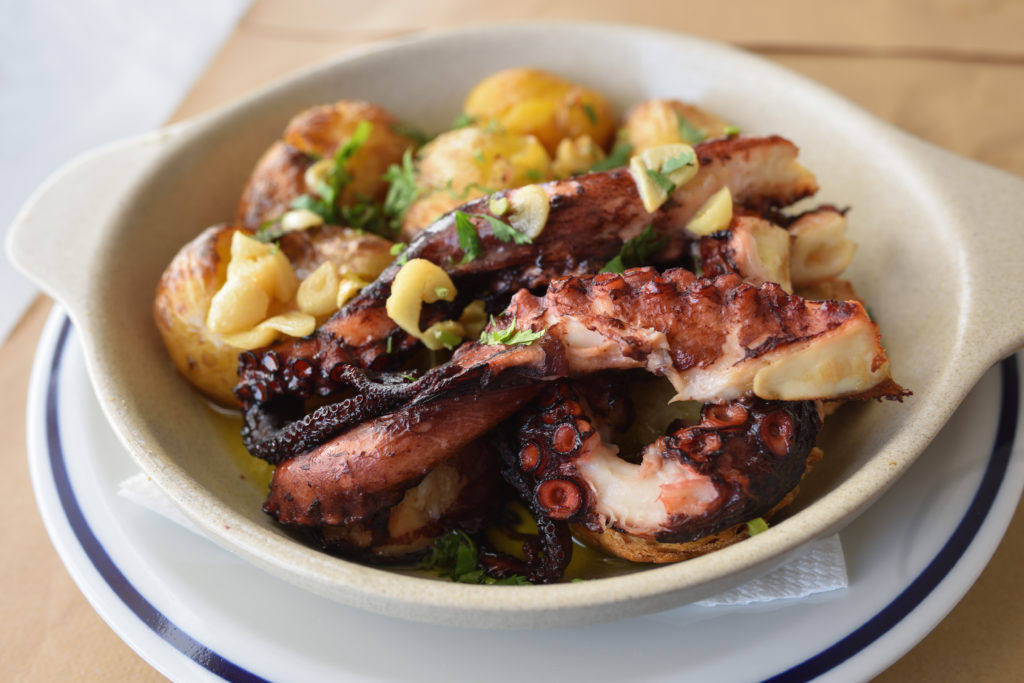
- Bacalhau à Lagareiro:Baked salt cod with onions, garlic, parsley, and plenty of olive oil. You can also find octopus prepared the same way.
- Carapau Grelhado: A very flavorful and meaty fish (Atlantic horse mackerel) with little fat. It is usually grilled and served with salad and fried or boiled potatoes.
- Sardinhas: A classic of Portuguese and Lisbon cuisine. Grilled sardines, almost always served alongside a delicious cornbread called "broa."
- Salmon and Tuna: Both are common on the menu and are served grilled.
- Hake fillets: Simple fillets of white fish (assorted) either poached or breaded and fried.
- Caldeirada: Can be made with fish, salt cod, or seafood. Cooked in a broth with white wine, onion, potatoes, tomato, peppers, and garlic.
- Açorda: A fish or seafood bread soup served alongside, or inside, a cornbread loaf known as "Broa":
- Cataplana: A specialty of the Algarve region that is very popular in Lisbon. The name refers to the two-part concave metal vessel in which seafood or meat is cooked together with vegetables and seasonings.
Meat
Grilled dishes, grelhadas (cooked on a grill), are the stars of traditional Portuguese restaurants. In all of them you can find cuts of beef, pork, and fish grilled over charcoal or on a flat-top. They are not heavily seasoned — just salt, garlic, and sometimes parsley — but they are delicious, and definitely the best option if you want something fresh, as the cuts available are usually on display so you can see exactly what you are getting.
- Carne de Porco à Alentejana:Pork prepared Alentejo-style with clams and potatoes.
- Pernil de porco:Pork leg roasted in the oven with vegetables and potatoes.
- Vitela assada: Veal roasted in the oven until wonderfully tender and delicious.
- Prego ou bitoque: When you see the word "Bitoque," it simply means a beef steak. It can be served "No pão" — meaning as a kind of sandwich — or "No prato," meaning on a plate, accompanied by a fried egg and french fries.
- Rojões: Pieces of pork fried in lard. DELICIOUS despite how indulgent it sounds.
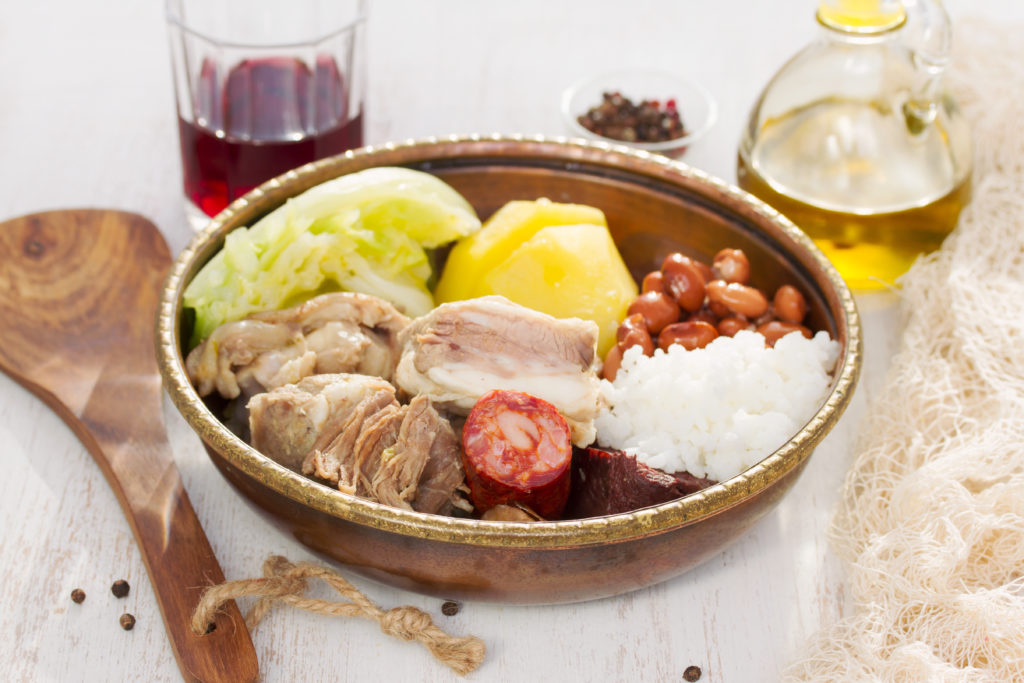
- Cozido à portuguesa: A hearty stew of beef, pork, chicken, and sausages.
- Arroz de Pato: A tender duck rice dish finished in the oven to achieve a crispy top layer. Delicious.
- Dobrada: A stew made with tripe and legumes.
- Frango assado: Traditional grilled chicken. Always fresh, affordable, and delicious.
Other savory specialties
- Caracóis: Snails are very popular in Lisbon.
- Moelas:Chicken gizzards in a vegetable sauce, slow-cooked until tender.
- Rissóis: A type of turnover that can be filled with a shrimp or meat paste.
- Pastéis de Bacalhau: Croquettes made with potato, salt cod, and parsley.
Soups
The Portuguese eat a great deal of soup, and it is common for restaurants to serve it at the start of a meal. It is often included in the daily set menu.
- Caldo Verde:The most popular soup in the country. A kale soup with Portuguese chorizo and potatoes.
- Sopa da Pedra: Generally made with whatever the chef has on hand! It includes vegetables, meat, and legumes.
- Creme de Legumes: A cream of vegetables soup; you will sometimes find a "light" version made without potatoes.
- Fish Soup: Fish soup with shrimp and vegetables. Delicious.
- Canja de galinha: A simple broth made with chicken, pasta, and onion. This is what the most Portuguese of mothers make when you have a cold.
Vegetarians
In a traditional restaurant, the vegetarian options you'll typically find are omelettes, cream of legumes, and simple salads.
A few years ago, vegetarian-friendly spots could be counted on one hand — today the scene looks quite different.
We recommend the vegetarian and vegan pizzas at Primo Basílico or the buffet at Restaurante Terra.
Desserts:
Dessert varies a lot depending on the restaurant and its category, but the following are what you'll find at any traditional spot.
- Leite Creme: Custard with gratinated sugar on top.
- Arroz Doce: Rice cooked with milk, sugar, lemon, and cinnamon (absolutely delicious!).
- Bolo de Bolachas: A cold cake made with marie biscuits and a coffee-and-butter cream.
- Salada de frutas: It's very common to order fruit as dessert in Portugal.
- Pudim Molotov: Egg pudding with caramel.
- Almond tart: A very crispy tart with sliced almonds. Sometimes it includes coconut.
- Aletria: Similar to rice pudding, but made with vermicelli noodles.
Drinks:
- Porto wine (or Port): A sweet liqueur perfect as a dessert wine or digestif.
- Vinho verde: A young wine, great for refreshing yourself.
- Bagazo: A grape brandy that pairs wonderfully with coffee at the end of a meal.
- Ginjinha:The Ginjinha is a liqueur made from sour "black" cherries, very popular in Lisbon.
- Super Bock and Sagres: The two best-known beer brands in the country.
- Caneca: If you want a carafe of wine, remember to ask for a "caneca."
- Garrafa: If what you want is a bottle, just ask for it by name: "garrafa."
- Soft drinks: This covers carbonated beverages like Coca-Cola, Fanta, etc.
- Sumos: Juices or nectars, which can be freshly squeezed but are generally available in bottles (Compal is the most popular brand).
- Still or chilled water: They will always ask whether you want your water at room temperature or cold (fresca).
HEADS UP: Keep in mind that when you arrive at the restaurant, they will bring you olives, pâté, cheese, and bread — you'll have to pay for whatever you eat! It's not free.
More about eating in Lisbon
If you've been to Lisbon and really enjoyed a dish or a restaurant, share it with us in the comments 🙂
